Life in Málaga—Life according to Vincent (Van Gogh)
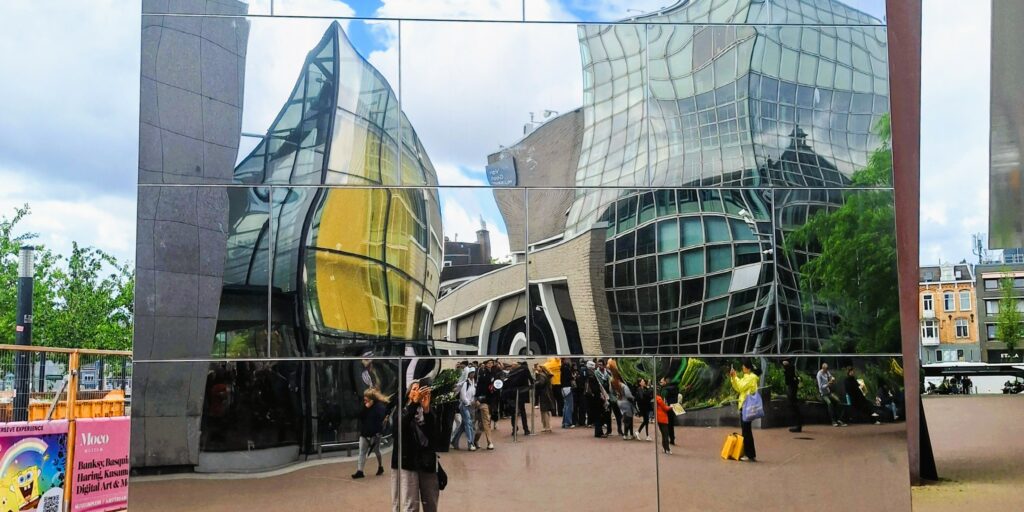
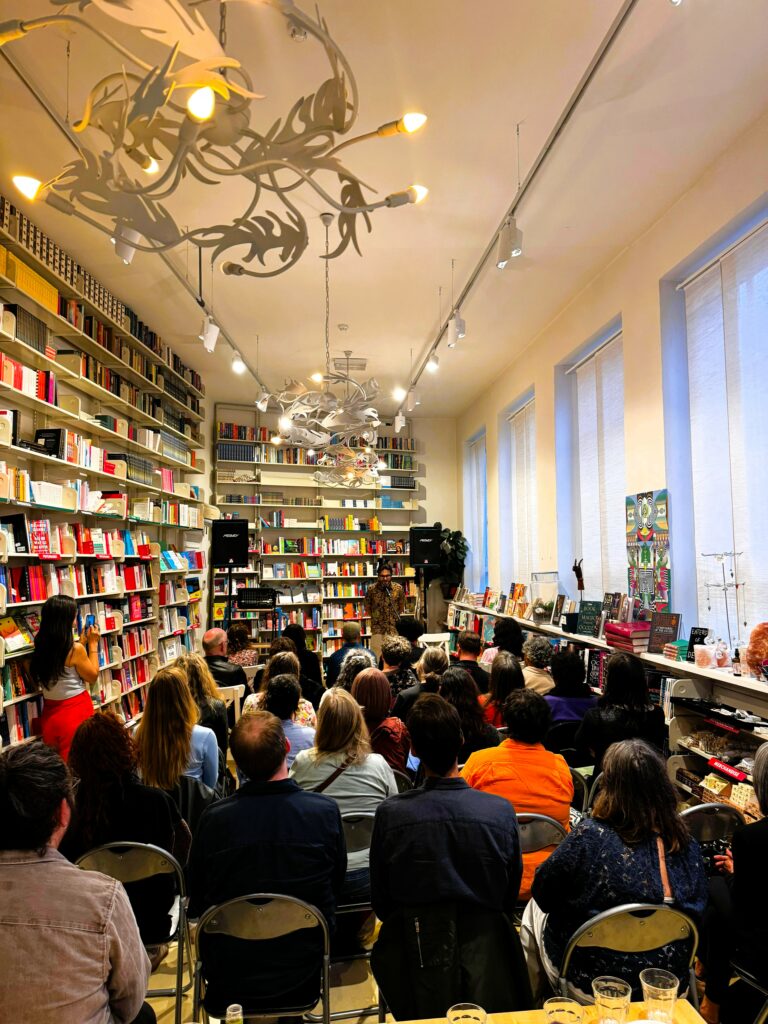
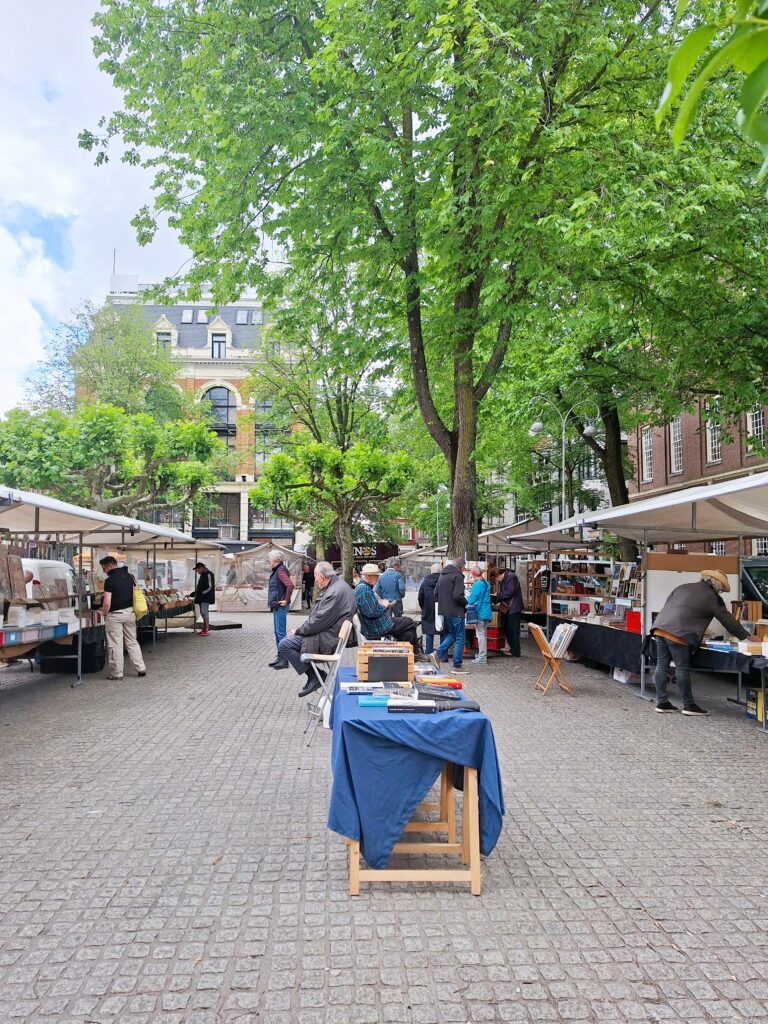
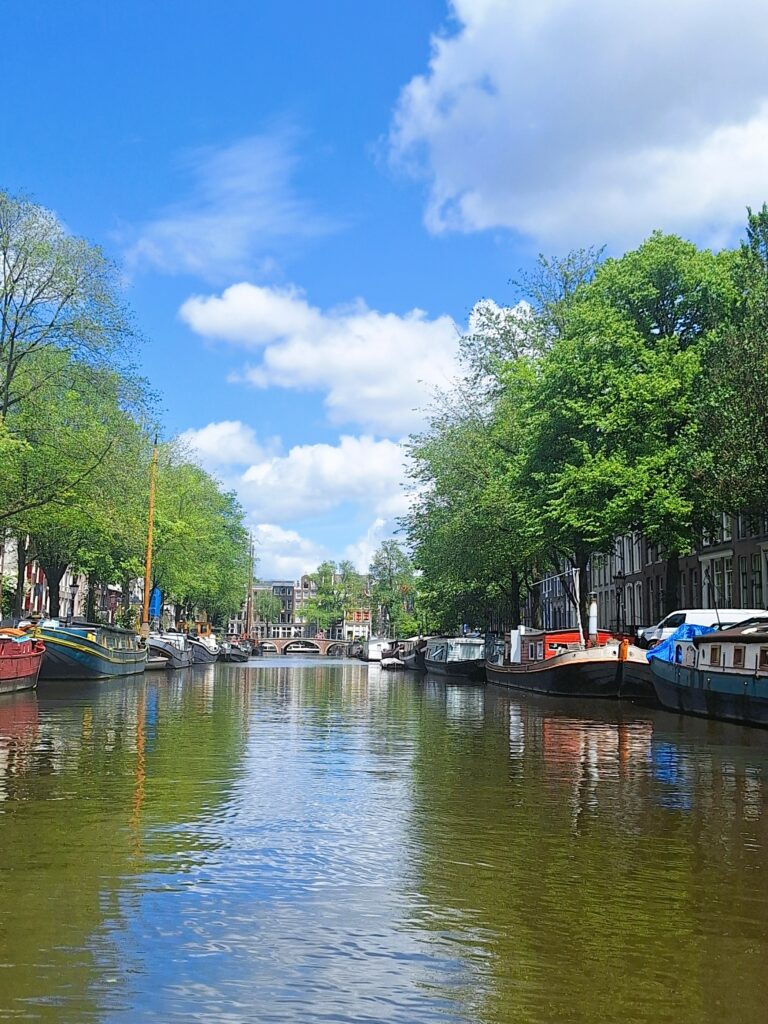
June began with a trip to Amsterdam for a European Writers Salon literary meetup that featured a reading, a book crawl, and a canal boat ride with writing prompts. I listened to an eclectic lineup of Dutch, British, Turkish, Italian, North American, and other writers share their work. I bought a book at each stop of the book crawl, including a 1943 edition of John Steinbeck’s The Moon is Down, which he wrote as propaganda to galvanize resistance in occupied countries during World War II. On the boat ride, on a sunny breezy day, I dutifully jotted words down in my notebook in response to the writing prompts, but what I mostly did was enjoy the scenery. The rows of narrow, tilting houses, intact since the seventeenth century, were a treasure to contemplate. After the Germans bombed Rotterdam in 1940, obliterating its historic center, the Netherlands was forced to surrender, thus saving cities like Amsterdam.
Before the literary activities, I visited the immensely evocative and moving Vincent Van Gogh Museum, an artist I’d been fascinated by since girlhood. The volume of work in his short life was impressive, not only the drawings and paintings but the hundreds of letters he wrote, mostly to his beloved brother Theo. In the museum gift shop, I bought a collection of quotes from his letters. Here’s one of them:
“It always seems to me that I’m a traveller who’s going somewhere and to a destination.”
—Vincent Van Gogh
Now that I’ve changed countries and continents, I’m taking opportunities to see places I’d only read about, and Van Gogh’s words, though likely referencing his inner artistic journey, are making more clear to me that wherever I go, that is my somewhere, my destination. Even when it’s just a twenty-minute walk away to dance. Or try to.
I went with my friend Diana to take a bachata lesson in a local park. We arrived early to watch the Level I class, which seemed echelons above the Level 0 class we had come for. We studied their feet, imagined our feet doing the same. When it was our turn, we learned the basic footwork, practiced the hip movement, and when the music was added we were able to move in step. But then came the part where we had to dance with a partner. Diana and I just wanted to learn the steps so we could each dance alone, but we had to play by the rules this time. All the men were young, and they rotated their way through the circle of women, most of them young and lithe in clothes that hugged their curves and bared their midriffs. Diana in her mid-sixties and me in my early seventies were easily the oldest in the group. Did we feel out of place? No, we revel in our maturity, wisdom, and no-fucks-left-to-give mindset that is the gift of ageing.
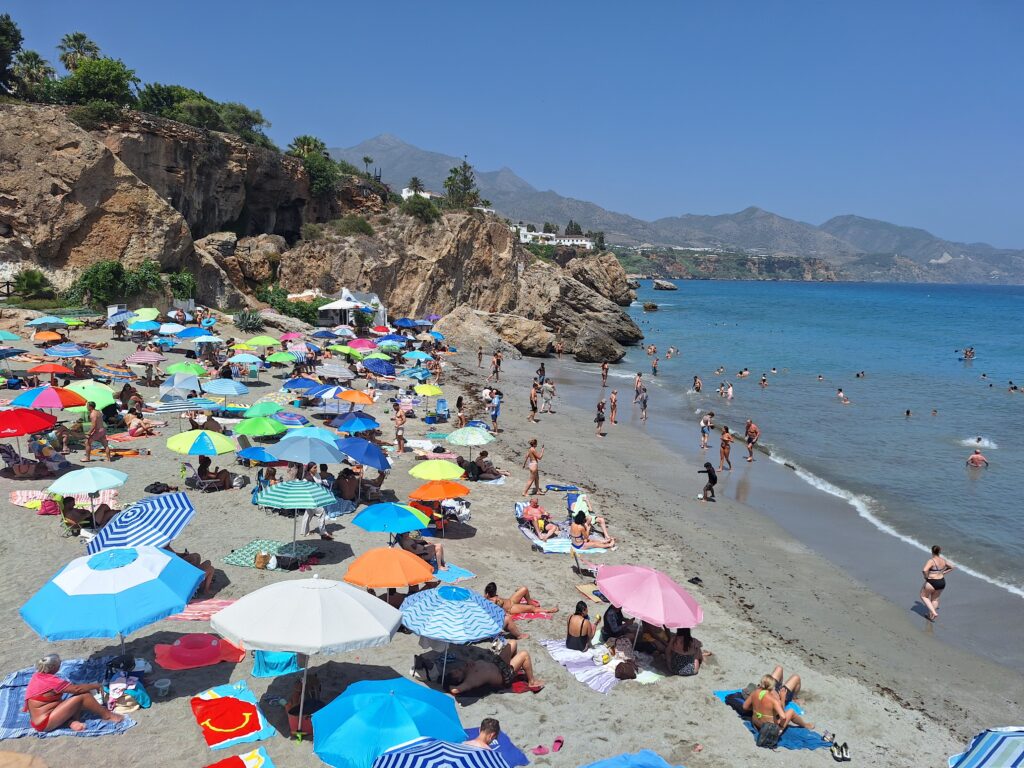
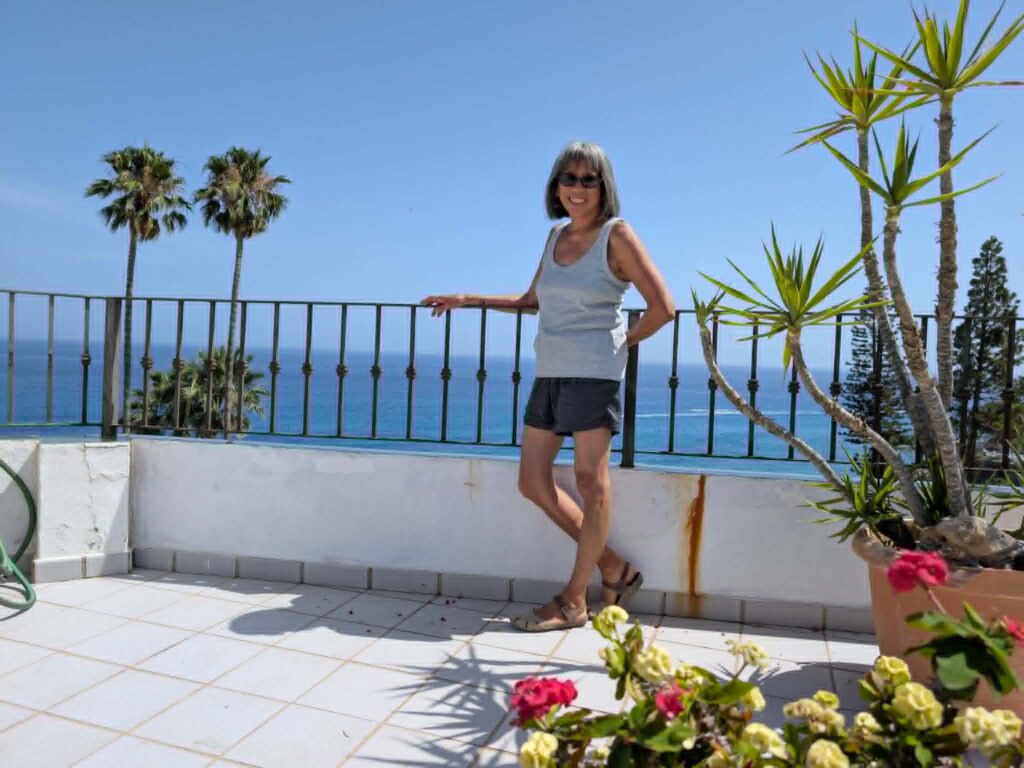
And speaking of ageing, I celebrated my seventy-third birthday on June 21 in nearby Nerja, a coastal town known for its Balcón de Europa with its breathtaking vistas of the Mediterranean. We rented an apartment with a view of the sea. We’re early risers and mornings on the terrace were wondrous with the light and its shimmer on the water, the not-yet-warm air and the seabirds slicing through it.
“Do you get up early? I do regularly, it’s good to make a habit of it. It’s precious and already very dear to me, that early morning twilight.”
—Vincent Van Gogh
Our short stay in Nerja consisted of beach time for me, exploratory walks for James, and trying out various restaurants, including a front table to watch the Spain-Saudi Arabia World Cup match on the restaurant terrace below our apartment. (Thank you, James, for going early to save a table!) It was a relaxing two days. I hope to continue this habit of having birthdays for years to come. I count them among my somewheres, my destinations.
I was back in Málaga in time for Noche de San Juan, a nighttime celebration on the beach involving the burning of adverse or undesirable memories or feelings and a cleansing or purification of the self with a dip in the sea.
As a prelude to the festivities, that afternoon in the elevator of my building, I dropped my keys and watched them disappear in the gap down the elevator shaft. As it happened, someone in the building had a key to the elevator and he was able to position the elevator to expose the bottom of the shaft. I hopped down to retrieve my keys after someone shone a flashlight down to expose its location among the non-specific elevator shaft detritus.

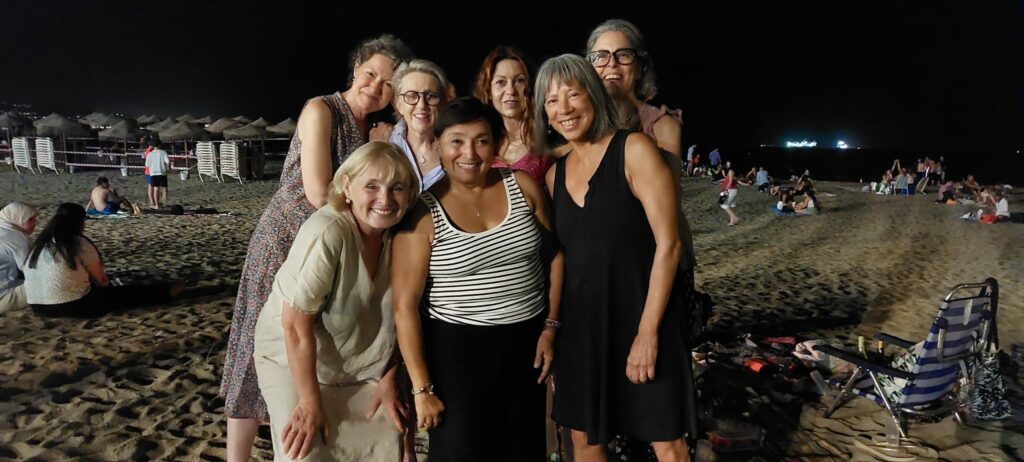
That night I joined my Charlatanas friends, who are my Spanish conversation practice group, on the beach. After snacking and passing around bottles of wine, we fed slips of paper containing our undesirables and unwanteds to the flames of a circle of candles on a plastic-coated paper plate. The flames died out to leave a hot black mess, which at some point was accidently kicked onto my feet. I responded by throwing sand on the affected area to prevent burns and then decided to run into the sea to submerge my feet, which I did only to be slapped by a suddenly high wave that drenched the dress I was wearing, capping that day’s series of mishaps. The message from the universe? I like to think it’s this:
“Success is sometimes the outcome of a whole string of failures.”
—Vincent Van Gogh
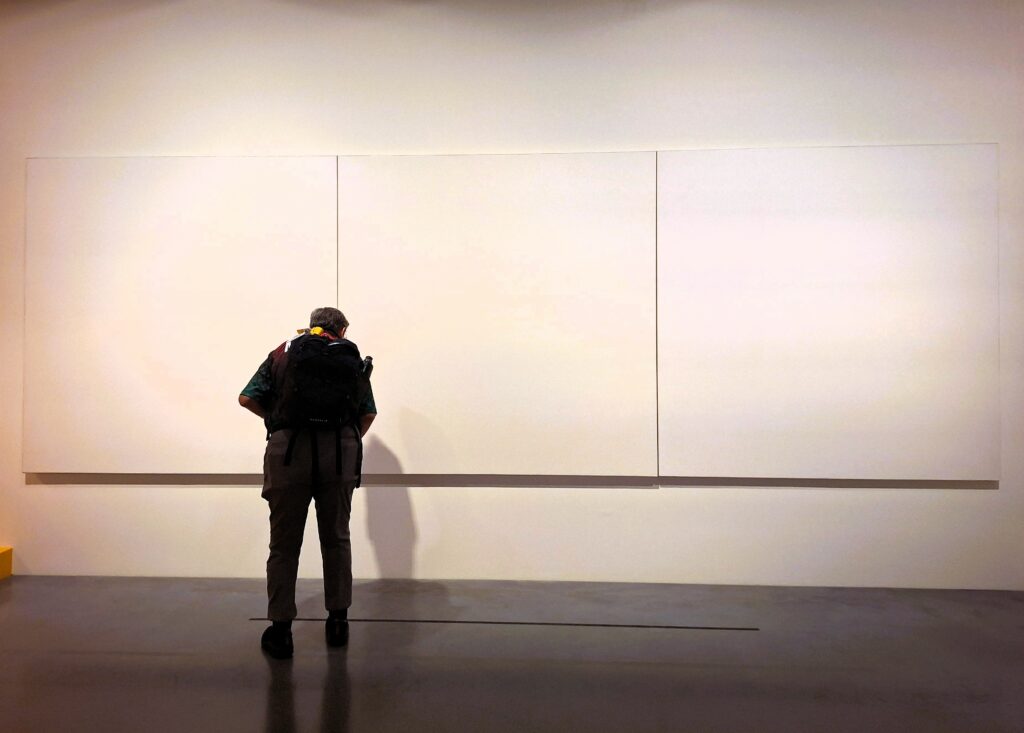
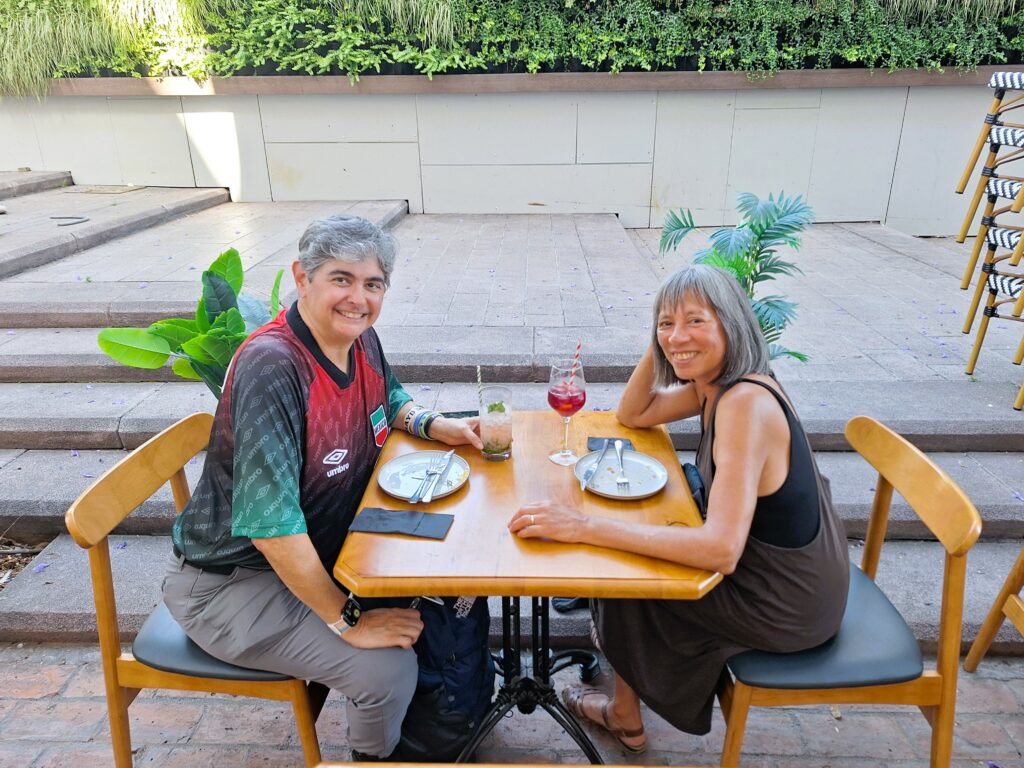
My long-time friend Marissa dropped into Málaga for an eight-hour visit from her primary destination of Valencia. We first met decades ago in Seattle when we were both members of the Latino writing group Los Norteños. I was immediately a fan of her poetry. But her sense of humor and general wisdom also revealed themselves early. Our lives and paths diverged since those early Los Norteños years and over time our relationship primarily existed on social media. So, it was a delight to spend part of a day with her in real life, chatting, eating, and looking at art at the Centre Pompidou Málaga while uncovering new facets to our friendship. In addition to being a poet she’s an engineer, an unassuming and inevitable blend of the analytic and artistic, and an elucidating presence when viewing abstract art. She reminded me that it’s not about what the art means, it’s about what the art makes you feel and that each of us brings our own experience to the encounter. In other words, observe and absorb.
“What else can one do, thinking of all the things whose reason one doesn’t understand, but gaze upon the wheatfields.”
—Vincent Van Gogh
I am three months away from the September 29 publication of my book Ofelia and Norma, and the anxieties about whether anyone will care, whether anyone will read much less review it, whether it will have a presence on bookshelves have knocked me off center causing me to drop keys down elevator shafts and be engulfed unawares by an oncoming wave. I can hope that in Van Gogh’s words, “success is sometimes the outcome of a whole string of failures.” I can also doggedly post reminders to pre-order. (See how I did that?) And I can acknowledge this:
“And so I am struggling for life and progress in art.”
—Vincent Van Gogh
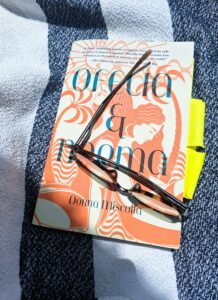
This was my beach buddy at Nerja.
Donna, it is always a pleasure to spend time with you! I miss that you are no longer in Seattle, since I am now back in the PNW. If the flight schedule had been kinder to me, I had envisioned us at a Spanish café, enjoying a late night cena, and maybe writing to some prompts. Sorry I had to cut the visit short. Perhaps we need some long-distance virtual writing sessions!
Oh, what fun we would’ve had if you’d had a different flight! Eating, drinking, and talking into the night. Next time. I’ll be reading at Elliott Bay Book Company in Seattle on October 29, and that may be the closest I get to Portland on this trip. But who knows, there’s still time for the book tour/publicity gods to intervene on my behalf.
A lovely post! And: I share your anxieties. All good wishes to you and Ofelia and Norma!
Thank you, Angela! And, yes, the pre-publication as well as the post-publication anxieties are real energy and morale sappers. Ugh! Looking forward to reading ypur book. I’ll pick it up from my friend’s house when I’m in Seattle in October.