Life in Málaga—All about books
It’s been a particularly literary and bookish month.
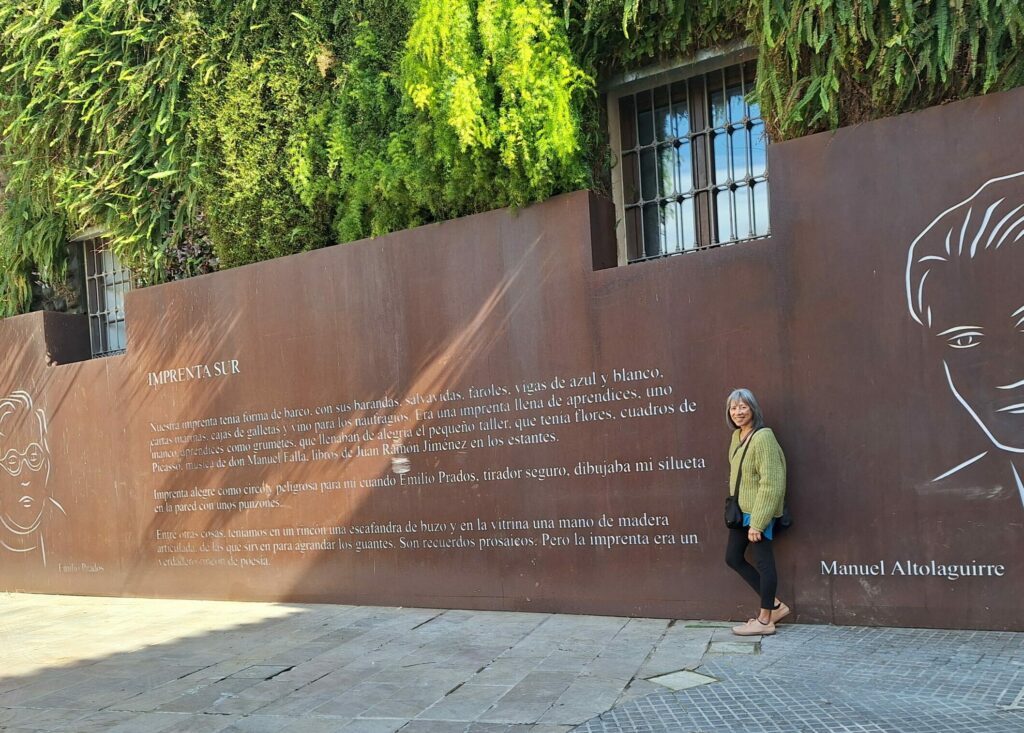
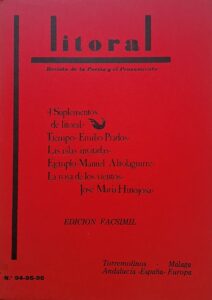 La Feria de Libros Antiguos had a two-week run on Alameda Principal. Booksellers from various Andalucian cities displayed rare, used, and new books for sale. I wandered over every day to browse. I wasn’t looking for anything in particular. I wanted something to catch my eye, to say I’m what you’ve been wanting but didn’t know it. The first thing I bought was a copy of Litoral, the literary magazine founded by members of the Generation of ‘27 which published such key figures as Lorca and Dalí. What I bought is a collection of four publications of the magazine in its early years in existence. In the photo above, I’m standing at the commemorative wall of Imprenta Sur, the press founded in Málaga by poets Emilio Prados and Maniel Altolaguirre to publish Litoral, which continues today as an important literary magazine.
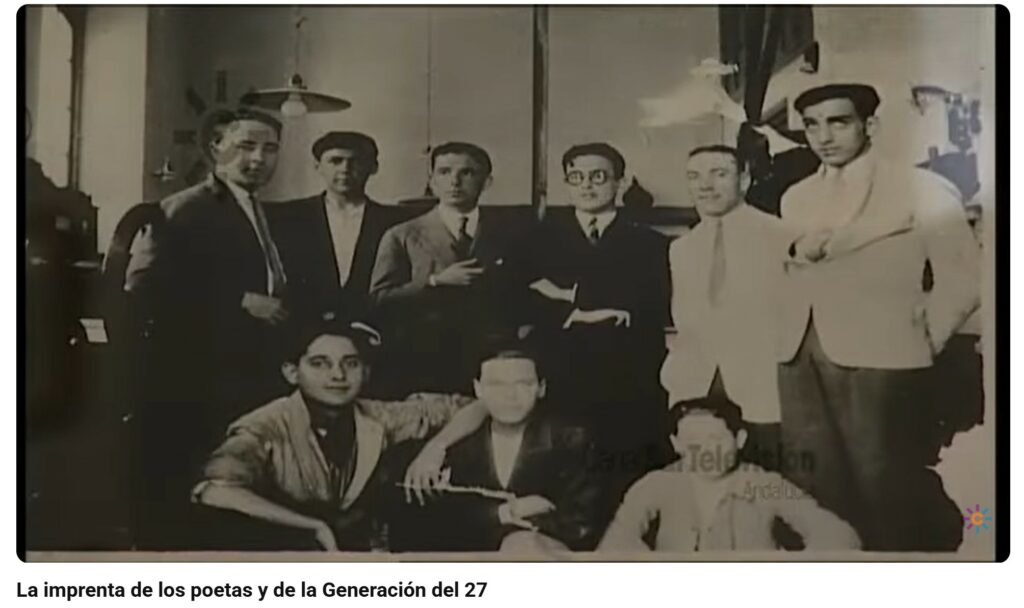
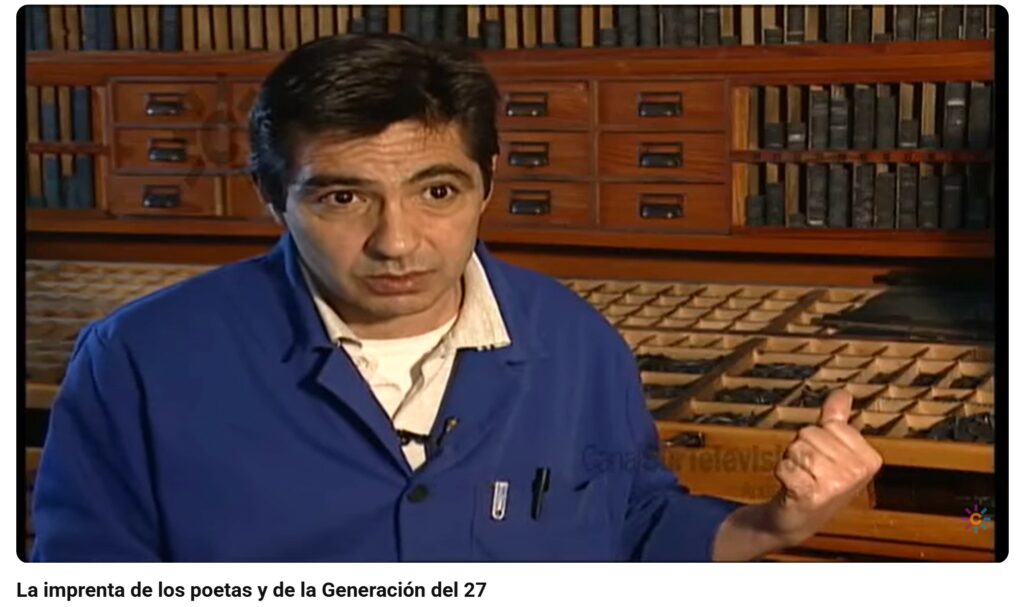
There’s this lovely fourteen-minute video about the press in Málaga that was used to print Litoral. During the Spanish Civil War, many of the poets who published or were published in Litoral went into exile and the press was taken over by the Falangists. Even if you don’t understand Spanish, you’ll be affected by the photos of the young poets who were involved in the movement to modernize Spanish poetry by embracing the avant garde, of the footage of the Falangists entering Málaga during the war, and of the fourth generation printer who talks of the magic of the printing press shaped like a boat that was used to produce Litoral.
Another book I bought is Mi querida hija Hildegart, the story of the young intellectual prodigy Hildegart Rodriquez, raised by her feminist mother to be the ideal woman during the short-lived Second Spanish Republic before the Spanish Civil War. At the age of eighteen when she was beginning to chafe against the restraints of her mother, Hildegart was murdered in her sleep—by her own mother. I mentioned in a previous post a film called La virgin roja about the lives of these two women, but my friend Luisa recommends another film called Mi hija Hildegart by Fernando Fernán Gómez, beloved Spanish, actor, director, writer.
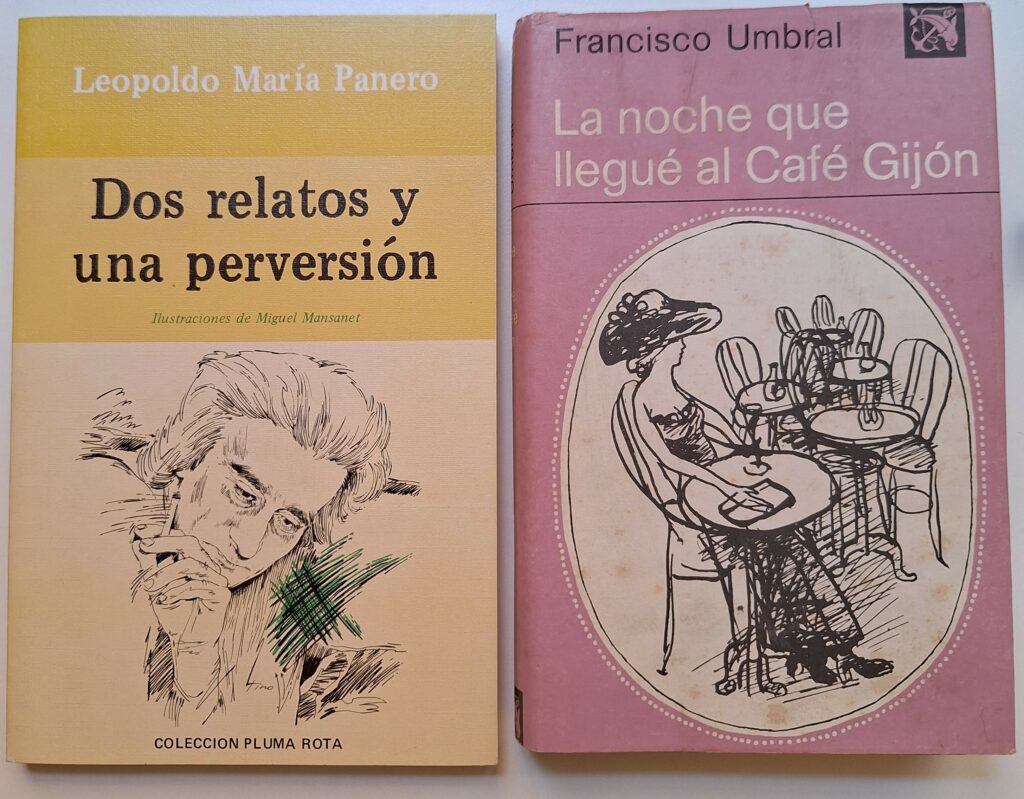
I also bought Dos relatos y una perversión by Leopoldo María Panero and La noche que llegué al Café Gijón by Francisco Umbral. The first intrigued me because it was written by a poet from a family of poets who lived turbulent lives during the Franco years and beyond. I’ve recommended previously the book The Age of Disenchantments by Aaron Shulman about the fascinating story of the Panero family. I admit I bought the book by Francisco Umbral because of the title. I knew that Café Gijón had been a gathering place for writers and intellectuals in Madrid and am eager to read what Umbral had to say about it. Sadly, the café closed last year, but happily it’s opening again this month, according to Grupo Cappucino, the hotel and restaurant chain that bought it. So when you’re in Madrid, go have coffee in the cafe where Spain’s great writers held tertulias, gossiped, and debated.
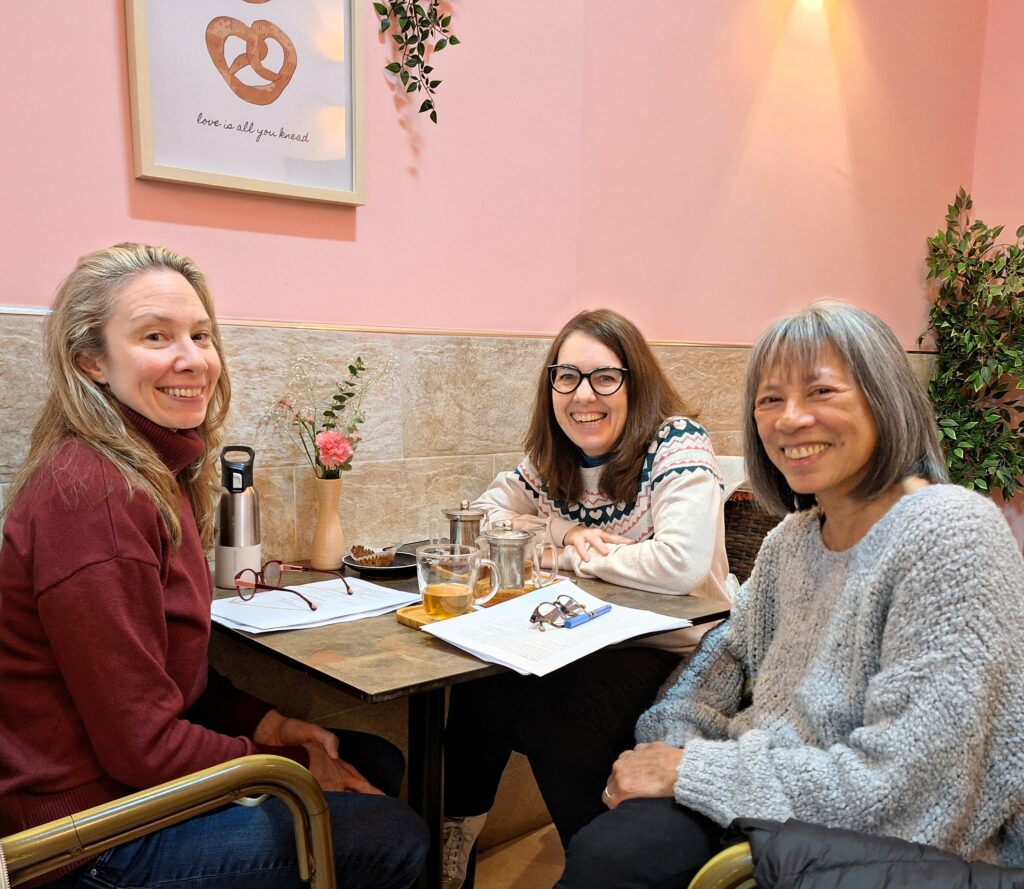
I attended a reading with Graciela, an Argentinian writer whose acquaintance I made at a writers’ meet-up in Madrid. She has worked as both a translator and interpreter in Spanish, English, and German. She now works in art therapy. We went to a book presentation by a Dutch author who lives in Málaga who recently had one of her books translated into Spanish. I found out about the reading from Luisa whom I met last fall when I enrolled in a creative writing workshop at the local library, the one that caused me anxiety because it was in Spanish. Anyway, I kind of like how two people I met in different literary-related circumstances came together at this event.
My friend Diana whom I’ve mentioned in previous posts sent me this video of a book vlogger. The speaker is Argentinian, an accent that can be hard for me, so thank goodness for the closed captioning. She’s talking about a Spanish writer who wrote romance novels and published more than 4,000 books, at one point writing one short novel a week, and sold more than four million books. Diana told me that when she was a young girl in Colombia, her mother forbade her to read Tellado’s books for these reasons:

Too much romance, too little reality. Still, Diana and I plan to get our hands on one to read as an historical artifact.
After a winter hiatus, Laura, the organizer of the Club de lectura for Spanish-language learners, resumed meetups this month with a story by Mexican author, journalist, and actor Ángeles Mastretta. We read an excerpt from her story collection Mujeres de ojos grandes. whose characters, women who seek experiences and lives beyond societal approval, are based on members of her family. We were a small group that week. In addition to running the Club de lectura, Laura also teaches Spanish to individuals and small groups and is finishing a master’s degree in teaching English. Anne, the other participant in that week’s meetup, is an attorney from Texas who has lived in Málaga for five years. I’m striving for her level of Spanish.
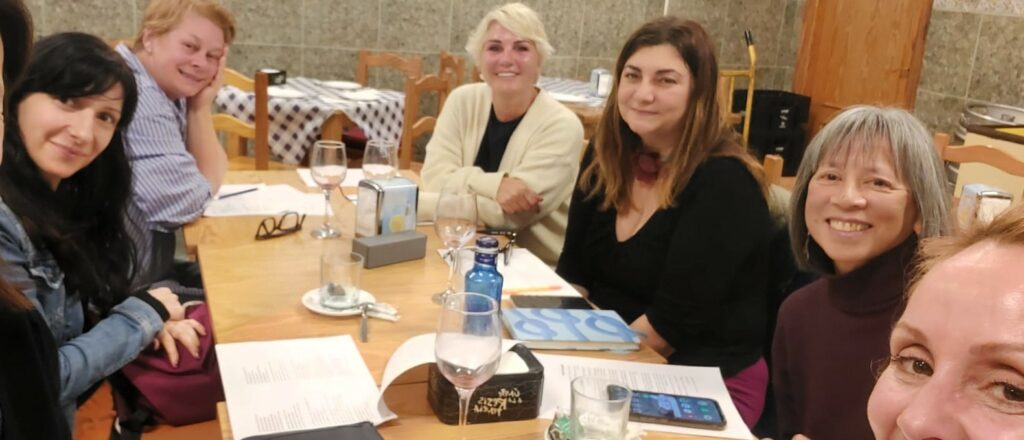
I’ve started attending the reconstituted writers’ group that I first joined upon arriving in Málaga. After a dormant period when the previous facilitators moved to northern Spain, a couple of writers have revived the weekly meetings with renewed energy and focus. In this group photo which turned out to be a selfie that is completely missing the self that is holding the camera and ony partially captures the face of lovely Annett, we are an international assemblage with a common experience of displacement—whether voluntary, forced, or circumstantial—from a home country. In this photo, there is a Hungarian, a Serb, a Dutchwoman, two Germans, an Iranian American, and me, an estadounidense of Filipino and Mexican heritage. It’s been a pleasure to listen to and read along with the work that is presented each week.
My half-Spanish cousin in Madrid teaches English and one of her students was looking for an opportunity to practice her conversation skills so now I meet weekly online with Conchi, and we spend a half-hour speaking English for her and a half-hour speaking Spanish for me. Conchi is a retired math teacher who also paints. She and her husband are avid readers, and I now have a list of book recommendations from them, including Nada by Carmen Laforet, which I’ve begun reading, and El Camino by Miguel Delibes. Both emerged as important writers after the Spanish Civil War.
Books I’ve been reading in English are The Man who Could Move Clouds by Ingrid Rojas Contreras, On the Calculation of Volume (Book I) by Solvej Balle, and Iberia by James Michener. Here’s one of my favorite observations by Ingrid Rojas Contreras in her book: “Magical realism was just realism to us.” She makes it when she’s describing the English teachers from the United States and England in her secondary school in Bogotá “who strove to tutor us on assimilation, even though this was our land they were on.”
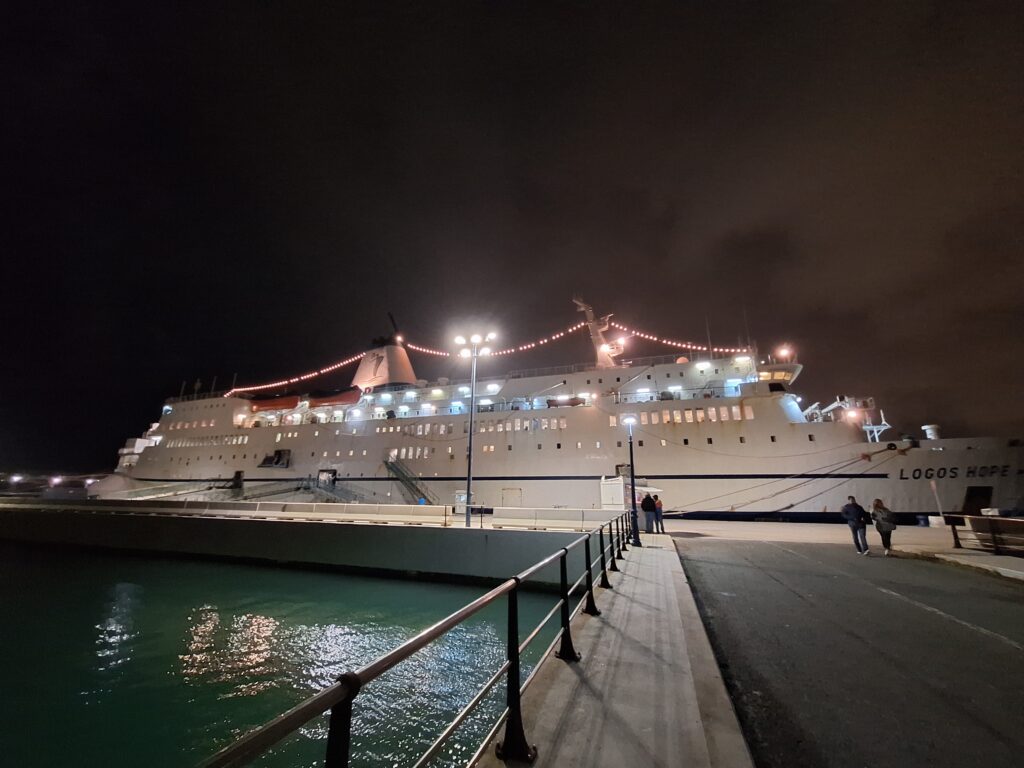
The Logos Hope ship docked in Málaga for two weeks with its floating bookstore. It’s a Christian-based organization and I wondered what their inventory of 5,000 books contained. I owned over a thousand books in our Seattle apartment. You’d think a ship would hold more than five times what I once owned in a very small apartment. Entry to the bookship was free for me since I’m (way) over sixty-five. Except for a few shelves of literature classics by the likes of Dickens, Kipling, and Austen, everywhere you turned were Christian-themed books and bibles. I texted my friend Fiona that I was on an atheist’s nightmare. “Get off now,” she replied, saying she thought “that boat was deeply worrying.” I did get off after purchasing a storybook (secular), a sticker book of hearts, and a dinosaur coloring book for granddaughter Malaya. Later my daughter noticed that one of the books originated from Walmart. Funny since I never shopped at Walmart when I lived in the States. Here’s a very romantic picture of a disappointing bookship.
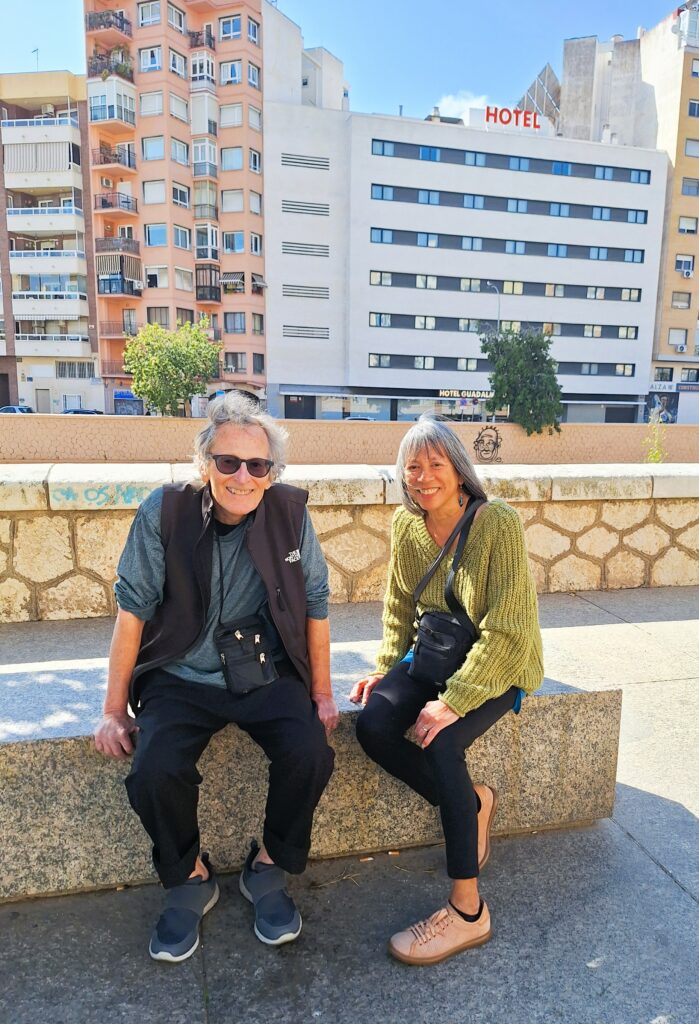
This month also marks three years in Spain for me and James. And our visa has been successfully renewed for another two years, after which we will qualify as permanent residents. We are grateful for this life. Here we are in the plaza behind our apartment. Behind the wall is the Río Guadalmedina, which runs through the city of Málaga.
And if you missed my promo video for my forthcoming book, here it is: